Lift
How Soaring Works
A glider is always sinking through the air around it. It stays up by finding air that is rising faster than it sinks. Pilots know three main kinds.
Thermals
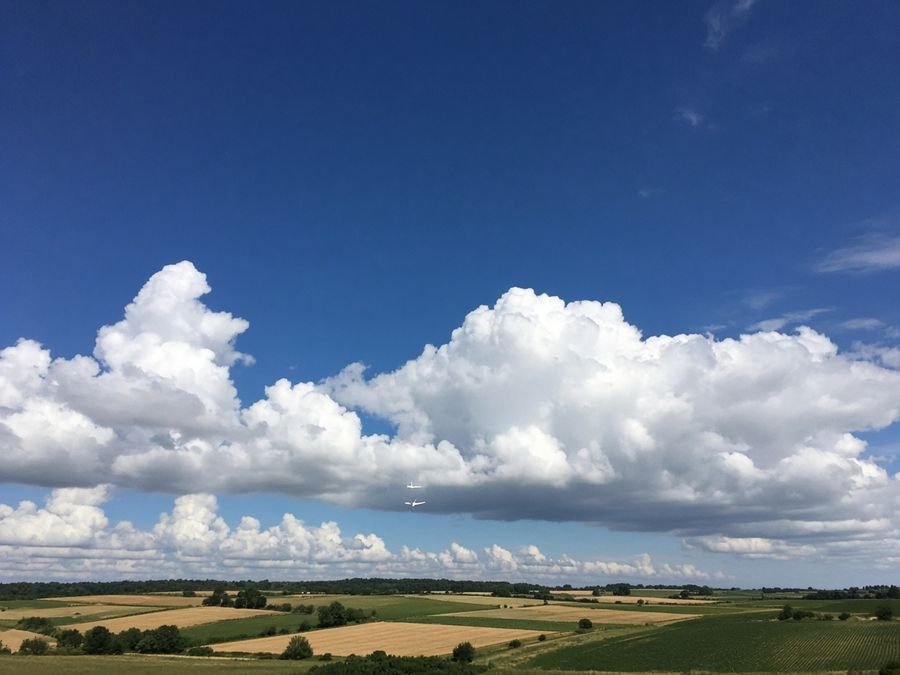
When the sun heats the ground unevenly, bubbles and columns of warm air rise. Gliders circle inside them to climb. A flat-bottomed cumulus cloud often marks the top of a good thermal; on a dry day the thermals may be invisible, which pilots call a blue day.
Ridge lift
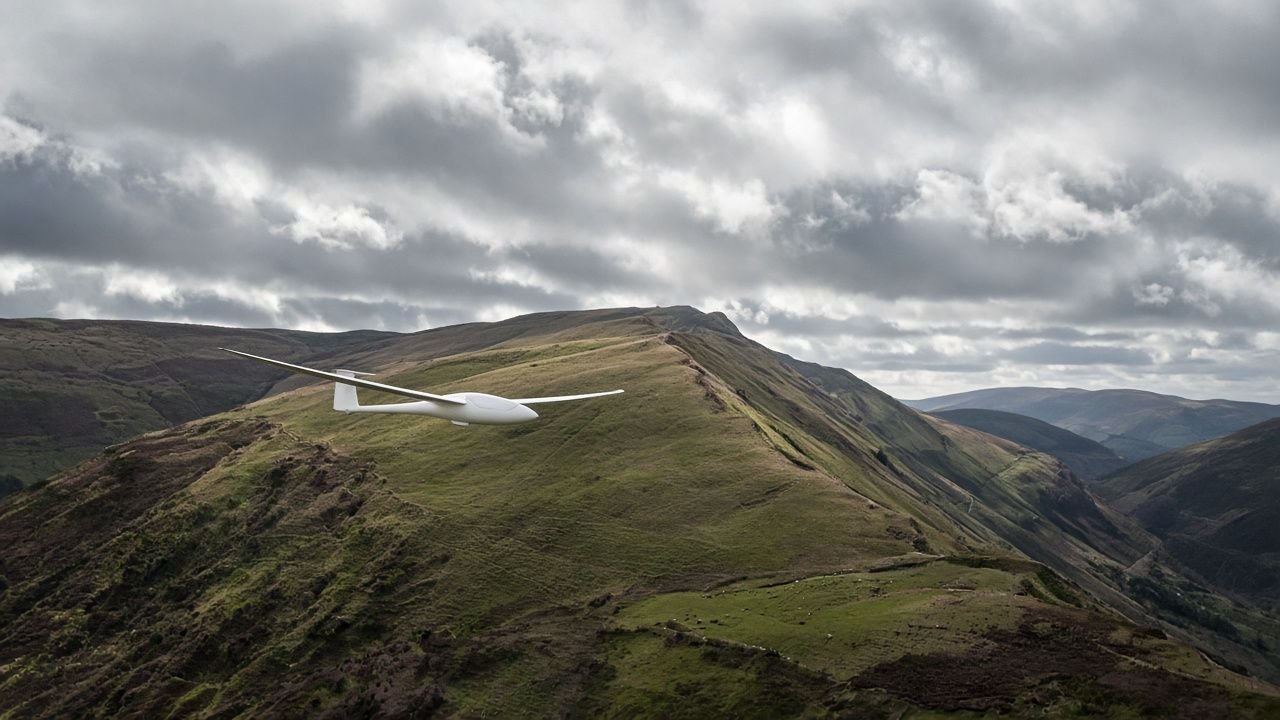
Wind blowing onto a hill or ridge is forced upwards. A glider can fly back and forth along the windward face in that rising band of air, sometimes for long distances along a line of hills.
Wave
Downwind of hills and mountains, a steady wind can set up standing waves in the air, like ripples behind a rock in a stream. The rising side of a wave is smooth and can carry a glider very high; smooth, lens-shaped lenticular clouds often mark it.
Glide ratio
Between climbs, a glider trades height for distance. A glide ratio of 40 to 1 means about 40 kilometres of travel for each kilometre of height in still air.
Soaring is learned in the air with an instructor. These notes are background reading only.